前言 Preface
在平坦垂直路區域我們應該用方格座標值發給門牌號碼, 但在山區等彎曲路的地方我們也能作一個可靠門牌號碼規劃。 傳統的號碼巷、弄制, 加上穩定門牌與距離間比例, 以及路口標示牌, 相信颱風夜空手(無電腦或圖)仍能夠僅憑地址而找到該山寮。
「山區門牌號碼規劃」 或應稱樹狀門牌號碼規劃, 以包括平地不規則形路。
In flat areas with perpendicular roads, we should use grid coordinates to assign addresses. However in mountain and other twisty road areas we can also make reliable addresses. Using Taiwan's traditional lane and alley numbering system, along with a steady house number per distance ratio, and sufficient signs, I am confident that even during typhoon night, barehanded (no maps or computer), one can still find that mountain shack by address alone.
"Mountain area address planning" is perhaps better called tree structured address planning, so as to include irregular roads of flat areas.
目標 Goals
救護車及一般民眾不帶地圖或電腦, 光憑門牌號碼必須找得到目的地。 號碼能耐萬年, 邏輯如新, 不需一再「整編」。
Ambulances and the general public, not carrying maps or computers, using just an address, get reliably to a mountain location. The numbers shall not experience "growing pains" and need to be renumbered.
方法 Methods
例 Example:
![[圖 Image: 珍東街 Zhendong St.]](images/zhendong.png)
圖 Image: 虛擬珍東街, 其本體由下而左轉, 僅見一小段。 路中央有號碼示例。 theoretical Zhendong St., only a short part of which is visible, entering from the bottom and leaving from the left.
圖中看到我們以穩定每公里四百個號碼(每側兩百)。 於圖上加註輔助號碼供承辦員作最後(左單,右雙)定號。 遇岔路就分出巷、再以弄,依台灣習慣。
On the image we see we use a steady 400 addresses per kilometer ratio (200 on each side of the road). Centerline number samples are shown to aid field workers estimate the proper final (right even, left odd) assignment. At forks we split off lanes, and then further alleys, as is the custom in Taiwan.
(2016 年另試鄉下以較寬號距標準、 二元樹的燥坑遍歷。 However in 2016 I experimented with using a wider distance in rural areas; Binary tree Zaokengian traversal.)
現在圖上只有兩棟房子, 14及15號, 但已預留每路兩邊門牌, 甚至全部空白間之門牌, 由未來叉路。 Currently there are only two houses on the map, Numbers 14 and 15. but we have reserved numbers along both sides of all roads, and indeed of all the white space in between as future branches penetrate.
路牌 Road signs
上圖路叉口所需之標示牌 Signs needed at road fork points on the above map:
- 珍東街324巷 Lane 324 Zhendong St.
- 珍東街324巷64弄 Alley 64 Lane 324 Zhendong St.
- 珍東街326巷 Lane 326 Zhendong St.
每路叉處僅需叉路一枚, 主路名能由叉路牌辨識。
Note only one plate (for the branch) is needed at each fork. One can determine the name of the parent road from the name of the branch. Note savings over the two plates needed at the corner of e.g., Penelope St. and Marr Lane! However we still use up as much metal or more with our lane and alley numbers being added to the signs, so perhaps we only save some screws.
However the mental savings beats the metal savings as now the two roads in question now have a systematic naming relationship that one need not be versed in e.g., old battleship names to figure out.
距離之直算 Direct calculation of distance
我們觀察到珍東街324巷64弄14號離珍東街起源點, 即珍東街1號旁,
We note that just looking at the address 14 Alley 64 Lane 324 Zhendong St., we can calculate the distance from the origin point of Zhendong St., i.e., the point next to 1 Zhendong St.,
(324+64+14) * 1000/400 = 1017.5
    meters
路程距離由地址一目了然。 現場以里程表定門牌, 坡度雖然往往佔不大, 亦算在內。
The distance needed to travel can be obtained directly from the address. Addresses assigned in the field via a odometer also incorporate slope, although slope's influence is rarely large.
會否出現同號巷弄與屋? Can there be a same numbered lane or alley and house?
有,如38巷穿越38號二樓正下方。
Yes, e.g., Lane 38 passes directly under floor 2 of house number 38.
耐幾年? How everlasting?
門牌定了後, 主要再發生變化的因素應該是新馬路幹線工程, 橫切原構造。 山越密, 可能越少。
After addresses have been issued, it appears the main possibility for changing them would be construction of a major road across the original pattern. The more deep the mountains, the less likely this is to occur.
細度問題 Depth problem
定樹根 Rooting the tree
定路原點則定其號碼巷、弄。 路樹太大地址太長, 超越弄。 路樹太小則滿山很多難記路名。
Care must be taken as to where one defines the root point of the named road from which all the numbered lanes extend from. Too big a tree and we will need to branch too deep, beyond alley. Too small a tree and and the hills will be filled with many hard to remember road names.
萬一要比弄更細? What if smaller than alley?
萬一一日某弄再有需門牌之叉路, 會超過台灣的傳統「某路幾巷幾弄幾號」系統。 郵局的中文地址英譯使用說明有「衖 Sub-alley」惟其發音與 「弄」同,人家也說兩者不過同字不同寫法。 也許衖、徑、衚衕作備用, 惟不宜離當地已有之「門牌語言」。
If one day a there is a fork road from an alley, the fork having need for addresses, we then are forced beyond the usual Taiwan sub-street numbering system. We simply don't have a good name to call this new even smaller road. (The Post Office translation table has a "sub-alley", but its pronunciation in Chinese is the same as "alley".)
也許可以號碼街: 某某路44街33巷22弄11號, 增一層。 (但也有規定, 稱為「街」該道必在某寬度範圍內等等。)
Perhaps use numbered streets: 11 Alley 22 Lane 33 Street 44 Whatever Road, to add another level. (But what about road width/name rules? To be called a "street" a road must be within a certain width, etc.)
路、巷、弄以下如果能再無限細, 就能形容無限小地方, 無數叉路! 應加以思考如何記之。
Road, lane, alley... if extended to an unlimited system, we then are able to describe infinitely small places, and can deal with infinite road forks! How to write such addresses is an area for further study.
惟於越南, 政府已開始針對 siêu xuyệt 問題。 把些巷升等成具名之街。 因地址太細時, 民眾自己的住址記不起來。 (格型區域我們則已經沒有這個問題了。)
However, in Vietnam the government is fixing the siêu xuyệt problem by giving some former alleys first level street names, as beyond a certain depth residents cannot even remember their own address. (For rectangular areas we conquered this problem.)
比較公用線桿牌 Comparison with utility pole name plates
Utility poles are customarily numbered in sequence with no "even on right, odd on left." (Indeed they hop across the road often.)
如電信桿牌之「珍東枝54右5右18左3…」能無限深。 惟桿間無穩定距離…
One notes telephone pole name plates' "Zhendong branch 54 right 5 right 18 left 3..." indeed have unlimited depth. However there is not constant distance between poles...
電桿牌則另檔別論。 Electric pole numbers are a whole other story. As far as their non grid portion, here we see one that just says 窰坑分11分14 Yaokeng branch 11 branch 14. (Probably what fits on the sign is the tail end of more complete name that begins with the name of the pole, e.g., 軟埤枝56 Ruanbi Zhi 56, that the current power line has sprung from. Zhi being a bigger branch than fen.)
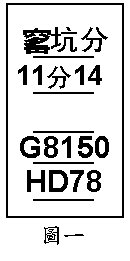
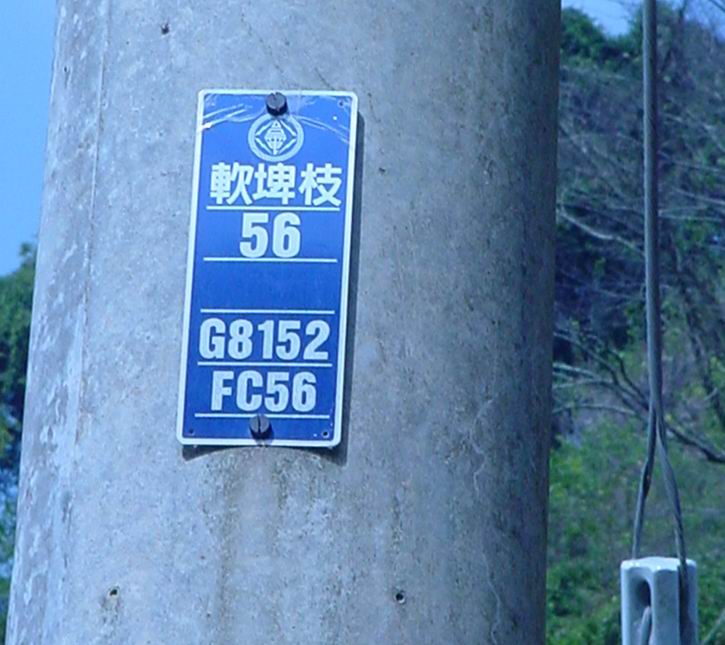
As they don't use right/left naming, one cannot tell which side the branch is on without being at the scene, nor can one have more than one branch per pole before having to come up with better names. At least with right/left indication, one can have two branches per pole.
I wish somebody would tell me what part of graph theory all this naming stuff is called.
英文內外外內 English order of writing
If making the first time choice for an entire country, on can consider if one wants to fix the English order of writing from inner to outer, as above, or match the Chinese order from outer to inner. But then one needs to add "number" (No.): Zhendong St. Lane 324 Alley 64 No. 14.
Also one can standardize abbreviation usage as some governments' post offices do, alley: ALY, lane: LN, all capitals.
環 Loops
中46線(東勢鎮慶福街)為長十三餘公里的「P」字形迂迴道路。 若想到假設中之5200號門牌, 應於800號左轉就到了, 免白繞山區又下來。 (但同樣, 任何道路不能盲目衝, 如台中市石城到豐原, 應由長庚大橋而不是光跟著台3線白繞東勢市區。)
Road "Zhong 46" (Dongshi District Qingfu St.) is a "P" shaped road 13+ kilometers long that loops back upon itself. To get to proposed house number 5200, one would turn left at 800, instead of going up the mountain and back down again needlessly. (But one shouldn't blindly follow any road. E.g., from Taizhong's Shicheng to Fengyuan, one should go over the Changgeng Bridge, instead of just staying on Highway 3, needlessly going through the Dongshi business district.)
故同樣能有指示牌「豐原10公里」與箭頭, 也可設「慶福街800~3035直走, 3036~5272左轉」加箭。 至少能交代有提醒民眾。
So just as there could be a sign "Fengyuan 10 km." with an arrow, perhaps there could be a sign with arrows: "800~3035 Qingfu St. go straight; 3036~5272 St. turn left." At least from the point of view of the government, we can say "yes, we told you so".
(5272=13.18*400; 3036=800+(5272-800)/2.)
結論 Conclusion
為座標式門牌不適用之地區, 希望建造理想門牌號碼, 其亦耐未來所有當地人口成長之可能。
It is hoped that we have created ideal addresses for areas where grids are not appropriate, with built-in capacity for all future population growth.
參考文獻 References
Georgia USA addressing (page 25) 很不同
is much different.